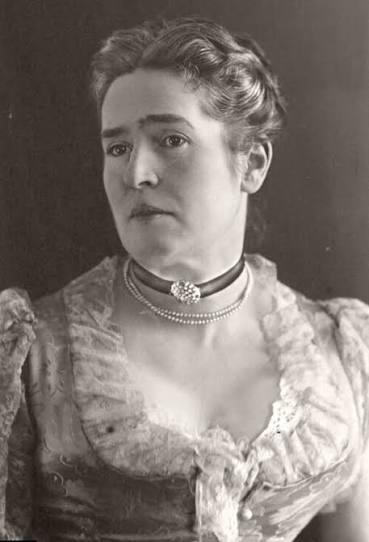
 Caroline Lane Jebb, Lady Jebb (née Reynolds, formerly Slemmer, December 26, 1840 - July 11, 1930) was an American-born intellectual, vibrant letter writer, and prominent
Cambridge socialite.
Caroline Lane Jebb, Lady Jebb (née Reynolds, formerly Slemmer, December 26, 1840 - July 11, 1930) was an American-born intellectual, vibrant letter writer, and prominent
Cambridge socialite.Queer Places:
Springfield House, Silver St, Cambridge CB3 9EU, United Kingdom
Ascension Parish Burial Ground, Cambridge, City of Cambridge, Cambridgeshire, England
Caroline Lane Jebb, Lady Jebb (née Reynolds, formerly Slemmer, December 26, 1840 - July 11, 1930) was an American-born intellectual, vibrant letter writer, and prominent
Cambridge socialite.
Born in Evansburg, Pennsylvania, on December 26, 1840, she was the daughter of the Rev. John Reynolds. In 1856, she married Lt. Adam J. Slemmer, who later became a Brigadier General in the Union Army during the American Civil War. Following Slemmer’s death in 1868 and the loss of their only child in infancy, she traveled to England to visit relatives.
In 1874, she married the distinguished Scottish classical scholar Richard Claverhouse Jebb. When he was appointed Regius Professor of Greek at Cambridge, the couple settled there, and Caroline became Lady Jebb following her husband's knighthood in 1900.
Famed for her sharp wit, candid conversation, and lack of Victorian stuffiness, she hosted an influential social salon that included key figures such as Charles Darwin, Robert Browning, Mark Twain, and George Eliot. She also served as a guardian figure to her niece Maud du Puy (who married George Darwin) and featured heavily as "(Great) Aunt Cara" in Gwen Raverat's classic memoir Period Piece.
After her husband’s death in 1905, she edited his letters and papers. She returned to the United States during World War I and died in Erie, Pennsylvania, on July 11, 1930. Her ashes were returned to England to be buried alongside her husband in Cambridge.
Caroline Jebb was an active member of the Ladies Dining Society, an exclusive discussion group formed in Cambridge in 1890 by Louise Creightony and Kathleen Lyttelton.
Formed as a gentle counter-response to male-only university dining clubs (such as the Cambridge Apostles), the group brought together 12 educated, progressive women—many of them wives of Cambridge dons and prominent supporters of female higher education and women's suffrage.
Caroline was admired within the group for bringing her "amusing American turn of conversation, complete lack of inhibitions, and great personality" to their private gatherings.
Historically, there is no evidence that Caroline Jebb identified as queer or had romantic/sexual relationships with women. Both of her marriages were heterosexual unions to prominent public men.
Where her biography intersects with LGBTQ historical contexts is largely through social, cultural, and familial adjacencies typical of late-Victorian and Edwardian intellectual circles:
Like many educated women of the late 19th century, Caroline participated in networks of deep, emotionally intense female friendships. While modern queer history often examines these spaces (like the Ladies Dining Society) for homosocial solidarity and subversion of patriarchal norms, there is no indication that her personal relationships were romantic or sexual in nature.
As a prominent academic hostess in Cambridge and London, Caroline moved in literary and artistic circles that included notable closeted, bisexual, or queer figures of the era—most notably author Henry James (a close friend of several Ladies Dining Society members).
In summary, while she operated within progressive, homosocial spaces that allowed women independence from traditional male-dominated spaces, her known biography remains anchored in her heterosexual marriages and her role as a key Cambridge host and intellectual catalyst.
References:
Support this project
This website is a passion project researched, developed, and funded entirely by me. If you find the content valuable and would like to help support the ongoing research and hosting costs, any contribution is deeply appreciated.
Thank you for keeping this independent resource alive!
My books on Amazon: Elisa Rolle's books